

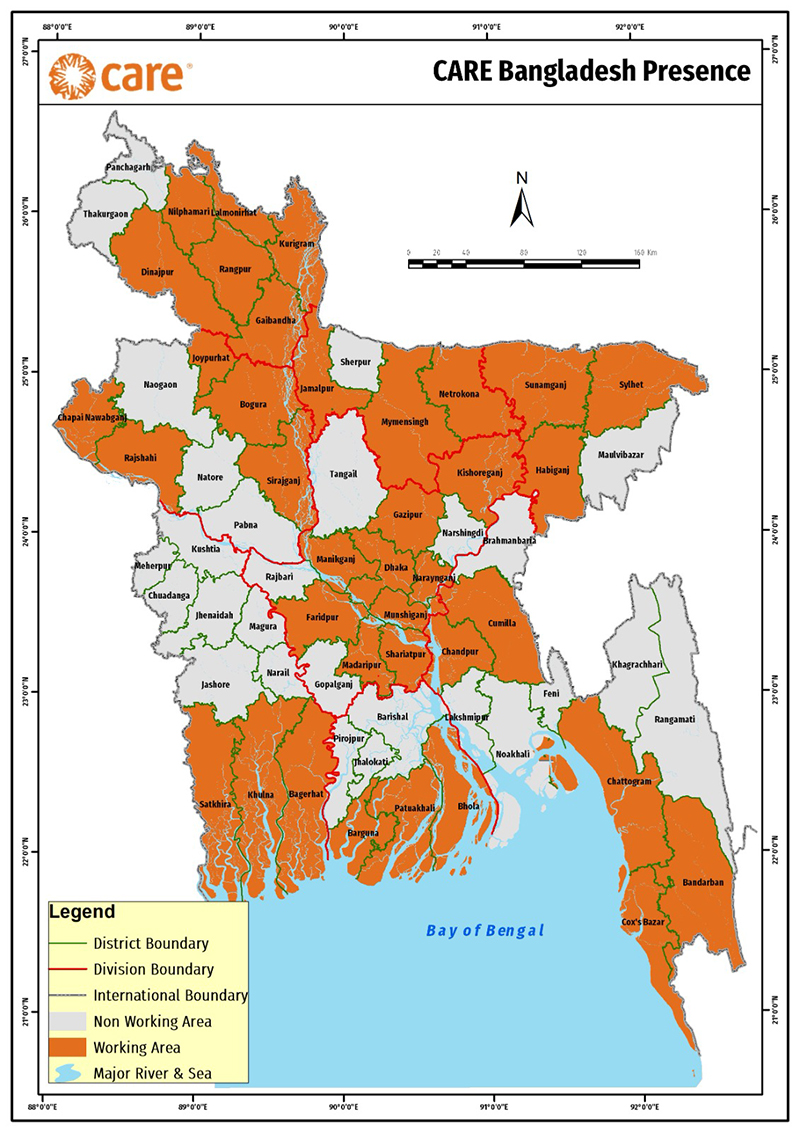

Bangladesh is highly vulnerable to recurrent floods, flash floods, cyclones, storm surges, landslides, fires, and other climate-induced hazards. Despite significant progress in forecasting and early warning systems, challenges remain in converting risk information into timely anticipatory actions that can protect lives, livelihoods, and critical assets.
The PROTISTHAA project aims to strengthen institutional systems for anticipatory action across Bangladesh by improving multi-hazard forecasting, impact-based early warning systems, disaster preparedness, coordination mechanisms, and financing pathways. Working across flproject,ne northern districts, flash flood-affected haor areas, cyclone-prone coastal regions, and all 33 Rohingya camps in Cox’s Bazar, the project will support government agencies, humanitarian actors, and communities to take timely and coordinated actions before disasters occur.
Through strengthened forecasting, trigger-based decision-making, community preparedness, and inclusive early warning dissemination, PROTISTHAA seeks to reduce disaster-related losses and humanitarian needs, while building a more resilient and responsive anticipatory action system for vulnerable populations in Bangladesh. The project is expected to directly benefit more than 87,000 people, including both host communities and Rohingya refugees.
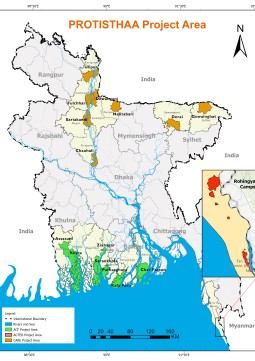
The project covers 15 disaster-prone districts across Bangladesh and all 33 Rohingya camps in Cox's Bazar. Interventions focus on four distinct hazard contexts:
Riverine monsoon floods
Flash floods
Cyclones and storm surges
Multi-hazard risks in Rohingya camps
The project strengthens the full Forecast → Trigger → Finance → Action chain to ensure people receive timely warnings and support before disasters strike.
👥 People Reached |
87,161 Direct Beneficiaries |
🔔 Early Warning Coverage |
750,000+ People Covered |
🏛️ Institutional Change |
70% of Institutions Ready for NEAP Implementation |
💰 Crisis Modifier |
25,538 People Eligible for Rapid Assistance 🟢 22,950 People to receive Multi-Purpose Cash Assistance (MPCA) 🟢 2,588 People to receive Emergency In-Kind Assistance |
© Copyright 2026 CARE Bangladesh. Powered By Bangladesh Online


