

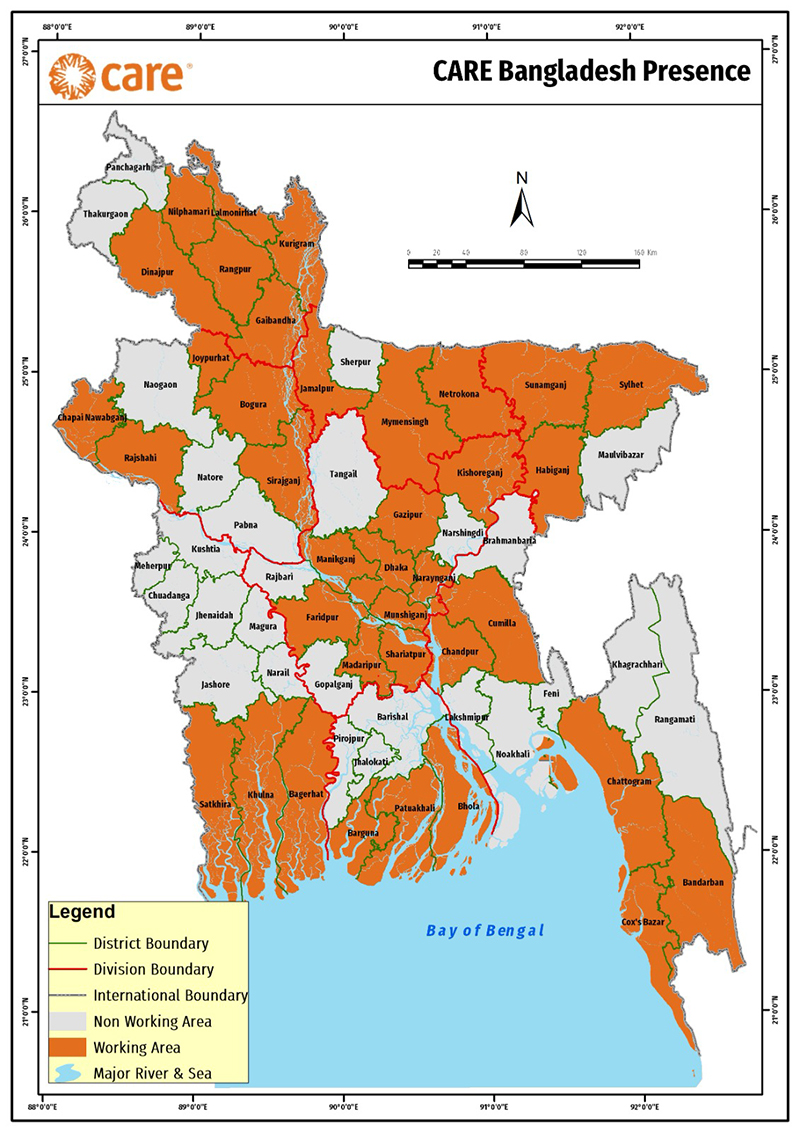

Since 2018, CARE has been delivering comprehensive Water, Sanitation, and Hygiene (WASH) services to the Rohingya community in Cox’s Bazar, with support from UNICEF and the Australian Humanitarian Partnership (AHP). These efforts aim to ensure access to safe water, dignified sanitation, and improved hygiene practices for approximately 60,000 individuals. CARE provides safe, treated, and chlorinated drinking water through multiple piped water distribution networks and deep tube wells. Sanitation interventions include latrines, bathing cubicles, Menstrual Hygiene Management (MHM) blocks, and handwashing stations. Human waste is processed through Fecal Sludge Treatment Plants, while solid waste is managed via a Materials Recovery Facility that produces compost and recycles plastic waste through Plastic Recycling Plant. Hygiene promotion is carried out through participatory community engagement and awareness sessions. With UNICEF’s support, MHM kits are distributed biannually to women of reproductive age. CARE emphasizes gender inclusion, accessibility for persons with disabilities, and active community participation. A robust Feedback and Accountability Mechanism ensures that community voices are heard and integrated into program design and delivery, reinforcing CARE’s commitment to responsive and inclusive humanitarian action.
Population Coverage: 59479

“CARE didn’t just fix the water system. They listened. They stood beside us.” – Rafiqullah.
Sixty-four-year-old Mohammad Rafiqullah, from G7 sub-block, Camp 15, fled Maungdaw, Myanmar, in 2017 and faced severe water scarcity. After NGO SKB installed a deep tubewell serving 23 families, he took the lead in maintaining it when the organization left. “When SKB left, there was no one to fix the tube well. I couldn't just sit and watch my people suffer. I had to do something,” he said. Since CARE Bangladesh began WASH interventions in 2019, Rafiqullah has become a key leader, ensuring continuous water service and inspiring his community through dedication and dignity.
© Copyright 2026 CARE Bangladesh. Powered By Bangladesh Online


